


Your home is doing more to your nervous system than you think.
Most people assume stress comes from their schedule, their responsibilities, or what’s happening around them. But what often gets overlooked is the environment we’re in all day long. Your home is constantly sending signals to your brain—either helping you feel grounded or quietly adding to your overwhelm.
This is where biophilic design comes in.

Biophilic Design
At its core, biophilic design is about bringing elements of nature into your home. But it’s not just about aesthetics. It’s about how your body responds to your surroundings. As humans, we are wired to feel regulated in natural environments. Think about how you feel when you’re outside—near the ocean, walking through a park, or sitting under trees. There’s a shift that happens almost instantly. Your body softens. Your breath slows. Your mind clears.
That response isn’t random. It’s biological.

The challenge is that most of us don’t live in environments that support that natural regulation. We live indoors, often surrounded by artificial light, synthetic materials, and visual clutter. Over time, that disconnect from nature can contribute to a constant low-level stress that we don’t always recognize.
The good news is that you don’t need to overhaul your entire home to feel a difference.
Start Simple
Small, intentional changes can shift how your space supports you.
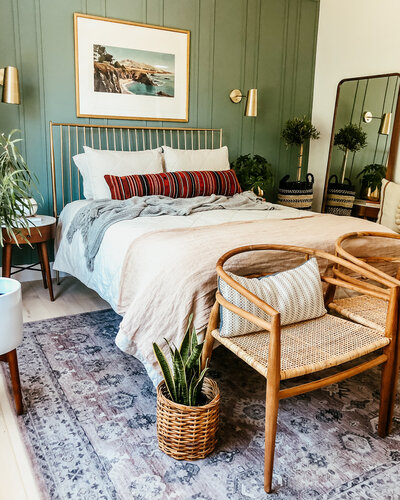
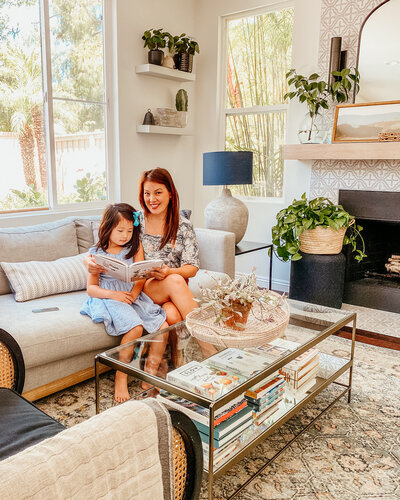
Start with something simple. Add a plant to a room that feels stagnant. Even a low-maintenance option like a snake plant or pothos can introduce a sense of life into the space. And if real plants feel overwhelming, even a well-chosen faux plant can create a similar visual cue for your brain.
Light is another powerful lever. Natural light helps regulate your circadian rhythm, which affects your sleep, mood, and energy levels. If you have heavy curtains blocking your windows, try swapping them for something lighter that allows more light to filter through.
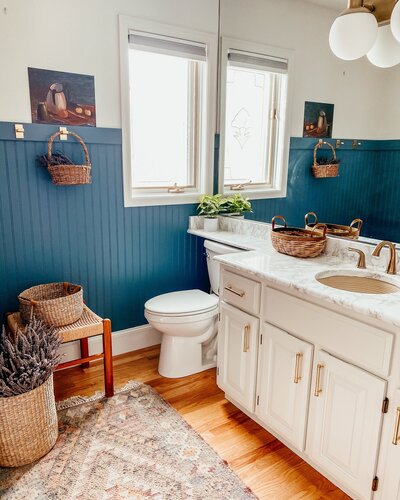
Textures matter too. Natural materials like wood, linen, and stone create a different sensory experience than plastic or synthetic finishes. They add warmth and depth, helping a space feel more grounded and less sterile.
And don’t overlook scent. Opening a window, lighting a candle, or using essential oils can immediately shift how a space feels. Scent connects directly to the part of your brain that processes emotion, which is why it can be one of the fastest ways to change your state.
What’s important to remember is this: your home doesn’t need to be perfect. It doesn’t need to look like a magazine. It just needs to support you.
Biophilic design isn’t about creating a styled space. It’s about creating a space that helps your body feel safe, calm, and regulated.

Layer Nature In
When you start to layer these elements into your home, something subtle begins to happen. You spend more time in spaces that feel good. You move through your day with a little more ease. You feel less reactive and more grounded.
Your home starts working with you instead of against you.
And that’s the real goal.
If this resonates, I go much deeper into this in Grounded Living, where I share how to bring these elements into your home in a way that feels natural, supportive, and sustainable.
Xo,
Anita











+ show Comments
- Hide Comments
add a comment