


Grounded Living: Why Biophilic Design Is the Missing Link
Between Your Home and Your Well-Being
(Grounded Living is available now for preorder.)

For years, I’ve watched people try to feel better by changing everything except their environment. They meditate, journal, take supplements, overhaul routines, yet they’re still overwhelmed, overstimulated, or disconnected. What I’ve learned, as both a therapist and interior designer, is simple: your home is either supporting your nervous system or slowly draining it. There’s no neutral.
This realization is what led me to write Grounded Living: Harmonizing Design and Nature in the Home, my new book that is officially available for preorder today. And honestly, this one comes straight from my bones.
Grounded Living is about more than aesthetics. It’s a photographed guide to biophilic interior design. A nature-centered approach to design that strengthens your connection with the natural world so you feel calmer, clearer, and more energized. The method goes far deeper than adding a plant or two. It’s about using the science of nature to transform your home into a restorative, regulated space.
And you don’t need a remodel. You don’t need a big house. You don’t need a giant budget.
If you live in an 800-square-foot rental or a spacious family home, this applies to you.

Photo Credit: AP Remodeling Inc and Sara Tramp-Ligorria
Why Biophilic Design Matters More Than Ever
“Biophilic design” simply means designing with the principles that make nature so restorative to our brains and bodies. It embodies light, pattern, texture, shadow, water, organic movement, and natural materials.
Decades of environmental psychology and neuroscience confirm the same truth:
Nature regulates us. Nature lowers stress. Nature restores cognitive clarity. Nature improves sleep and mood.
But here’s the problem: most of us live in environments that fight our biology.
– Harsh lighting
– Heavy, stagnant energy
– Dark corners with no visual relief
– Screen-centric rooms
– Synthetic textures everywhere
– No sensory softness
– Not a rhythm in sight
This book solves that.

Photo Credit: Sara Tramp-Ligorria
Grounded Living helps you mimic the nervous-system benefits of the outdoors inside your home, no matter where you live.
The Roots Of This Book
A few years ago, while driving, the phrase “Grounded Living” came to me. It was clear, direct, and almost spiritually delivered. At that point in my life, everything felt chaotic. I needed grounding more than anything. And I knew I wasn’t alone.
Growing up in the Pacific Northwest shaped me deeply. Water, mountains, wet forests, the quiet of the sky. All of that imprinted on me. Nature was my language before design ever was. When I became a therapist, I used nature metaphors instinctively. When I became a designer, biophilic design was the through-line tying everything together.
Writing this book was a return to myself. A remembering. And an offering.
What You’ll Find Inside the Book
I curated an incredible group of photographers and designers, alongside my own work, to showcase the pinnacle of biophilic design within my Grounded Living method. Grounded Living features more than 200 full-color photographs of homes around the world — aspirational, deeply livable, and rooted in nature-centered design.
You’ll learn how to:
1. Bring the Outdoors In
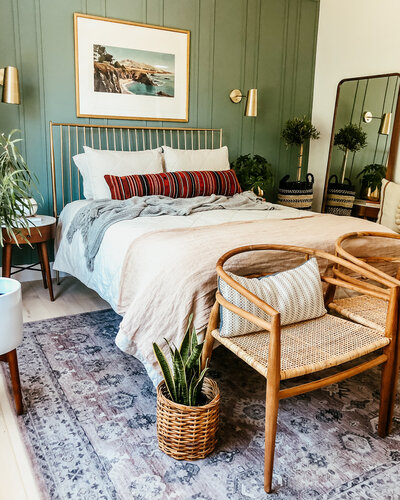
Use natural fibers, textures, and finishes to soften your space and mimic the calming qualities of nature. Think tactile upholstery, organic wall treatments, wood tones, stone, and scent.
2. Design With Light
Leverage reflective surfaces, strategic light placement, and circadian-friendly illumination (“biodynamic lighting”) to support your mood, sleep, and energy levels.
3. Integrate Water Elements
Create sensory experiences, tiny meditative moments, and even hydroponic gardens that boost serenity.
4. Create Natural Order
Learn the difference between sterile minimalism and meaningful, regulated order—using energy breakers, flow, and “rhythm” instead of rigid formulas.
5. Live Outside
Develop daily rituals, sensory pathways, and outdoor extensions that reconnect you to your surroundings.
This book teaches you how to design with nature, not just around it.

Photo Credit: Ali Harper
A Basement With No Windows That Felt Like the Ocean

Photo credit: Brie Williams
One of the most meaningful biophilic design challenges I’ve worked on was the House Beautiful Whole Home 2024 project, where I designed a windowless basement. Designing among such an elite group of designers was intimidating! I wanted my room to feel cohesive with their work but still unmistakably mine.
A dark basement could easily become claustrophobic. Instead, I transformed it into a calming, ocean-inspired retreat.
I layered:
– tonal blues and soft gradients
– organic curves
– diffusion lighting that mimicked daylight
– balanced textures that created movement and softness
– high–low materials that looked elevated but remained accessible
The result was a space that felt expansive and regulating even without a single window. That’s the power of biophilic design when matched with intentional nervous-system support.

Photo Credit: Brie Williams
A Client Story: When Light Changed Everything
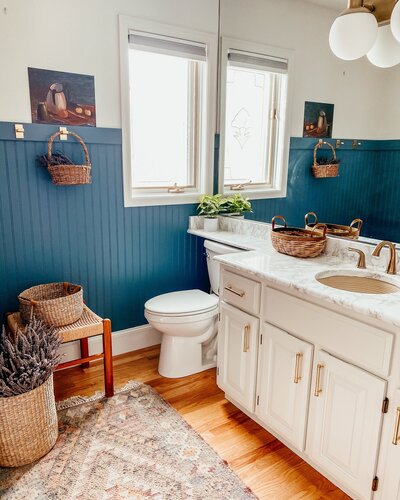
A client once came to me with severe seasonal affective symptoms. Their home—especially the bathroom and living room—was dark, heavy, and energetically stagnant.
We didn’t touch the architecture.
Instead:
– We amplified natural-light pathways
– Introduced paint colors that reflected warmth instead of swallowing it
– Used layered lighting to mimic morning-to-evening rhythms
– Added tactile materials that invite touch and slow the nervous system
Within days, the client told me, “My home finally feels like it’s helping me.”
That’s what this book teaches you: how to make your home a participant in your wellness, not just a backdrop.

Photo Credit: Ali Harper
Why Now? Why This Book?
We’re overstimulated. Tired. Drowning in digital overwhelm.
And at the same time, craving connection, quiet, and meaning.
Grounded Living is practical, beautiful, and—most importantly—doable.
It’s not about perfection or performance.
It’s about creating a home that supports who you are becoming.
Whether you crave:
– less stress
– more calm
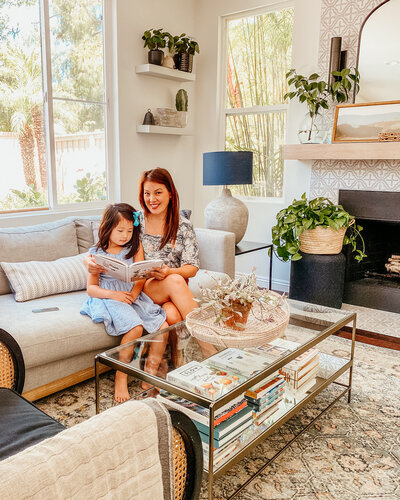
– deeper family connection
– better sleep
– a sense of rootedness
– or simply a more beautiful home
…this book is your roadmap.

Photo Credit: Ali Harper
My Hope for You
My core belief is unchanged: your home can change how you feel.
It can regulate you. It can ground you. It can help you exhale again.
Nature is at your fingertips, no matter your budget, square footage, or living situation.
This book is my invitation for you to experience that.

Photo Credit: AP Remodeling Inc. and Sara Tramp-Ligorria
Preorder Grounded Living
Grounded Living is available now.
If this speaks to you, if you crave a regulated, beautiful, supportive home, I would love for you to preorder a copy.
Preorder link: https://www.amazon.com/Grounded-Living-Harmonizing-Design-Nature-ebook/dp/B0FH16645K
Over the next few months, I’ll be sharing mini-lessons, behind-the-scenes stories, biophilic design breakdowns, and practical ways to bring more harmony into your home.
I can’t wait for you to read this.
And I can’t wait for your home to start supporting you the way it was always meant to.
Xo,
Anita











+ show Comments
- Hide Comments
add a comment