

Lighting is one of the most underestimated elements in a home.
Most people think of lighting as purely functional—something you turn on when it gets dark. But in reality, lighting has a direct impact on how you feel, think, and function throughout your day.

Light the Way
It’s not just about visibility. It’s about regulation.
Your body is highly responsive to light. Natural light, in particular, plays a critical role in regulating your circadian rhythm, which influences your sleep, mood, and energy levels. When your home lacks proper lighting—or relies too heavily on harsh, artificial light—it can leave you feeling overstimulated, fatigued, or even slightly on edge.
You may not consciously notice it, but your body does.
That’s why one of the simplest ways to improve how your home feels is to start with light.

Natural Light
First, look at how much natural light you’re allowing into your space. Are your windows blocked by heavy curtains or furniture? Could you switch to sheer window treatments that let light filter through while still providing privacy?
Even small adjustments—like pulling back curtains during the day or repositioning a mirror to reflect light—can make a noticeable difference.

Aritificial Light
Next, consider your artificial lighting.
Overhead lighting tends to be the default in most homes, but it’s often the least flattering and the most activating. It can feel harsh and flat, especially when it’s the only light source in a room.
Instead, think in creating visual depth.
Incorporate table lamps, floor lamps, and wall sconces to create a softer, more dimensional lighting environment. This allows you to control the mood of the space and shift it depending on the time of day or how you want to feel.
Warm light is generally more calming, while cooler light can feel more energizing. Being intentional about this can help support your natural rhythms instead of working against them.
And then there’s placement.
Lighting isn’t just about what you use—it’s about where you place it.

Photo Credit: The Joshua Tree House
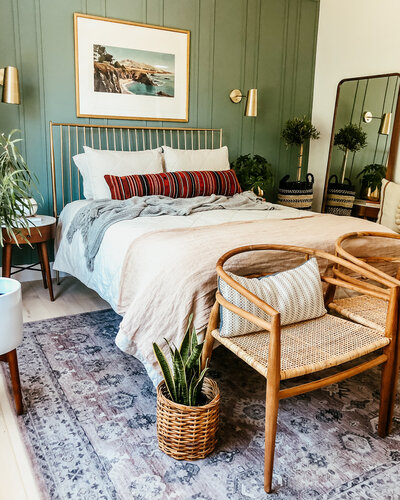
A lamp next to a chair can create a sense of intimacy and encourage you to sit and unwind. Soft lighting in the evening can signal to your body that it’s time to wind down.
These cues matter more than we realize.
Lighting Goals
The goal isn’t to create a perfectly lit home. It’s to create a home where the lighting supports your daily life—where it helps you feel focused when you need to be and relaxed when it’s time to rest.
When you start to see lighting as a tool rather than an afterthought, your entire space shifts.
And often, it’s one of the fastest ways to change how your home feels—without changing anything else.
Check out my new book, Grounded Living walks through how to layer lighting and other design elements to support your nervous system and create a more grounded home environment.
Xo,
Anita











+ show Comments
- Hide Comments
add a comment